
Context
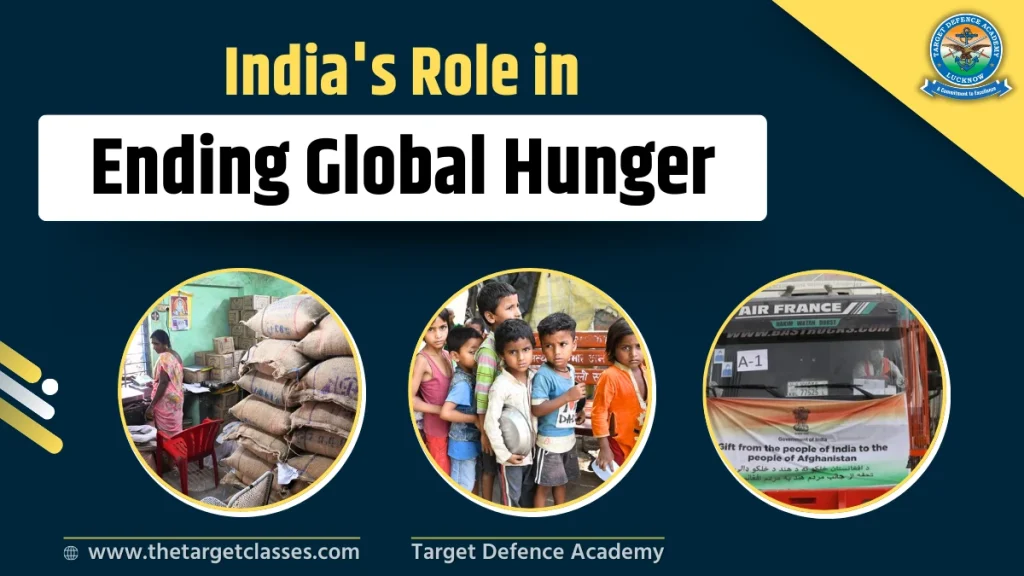
India has come forward as a decisive force in steering global progress, as the world is ready to declare war against hunger. India’s progress is all because of its transformative approach to food security.
Global Hunger Trends
(i) According to the United Nations’ State of Food Security and Nutrition in the World 2025 report, 673 million people faced hunger in 2024 (688 million in 2023).
(ii) Food Insecurity and Diet Affordability: 2.3 billion people experienced moderate or severe food insecurity in 2024 – 336 million more than in 2019.
(iii) Child and Maternal Nutrition:
(a) Stunting among children fell to 23.2% in 2024, down from 180 million in 2012 to 150.2 million.
(b) Wasting (6.6%) and overweight (5.5%) rates among children remain largely unchanged.
(c) Exclusive breastfeeding rose from 37% (2012) to 47.8% (2023) – a significant improvement.
(d) Only 34% of children aged 6–23 months meet minimum dietary diversity; 65% of women aged 15–49 meet the minimum.
(e) Anaemia among women increased from 27.6% to 30.7% between 2012 and 2023.
(iv) India & Global Food Security Report (2025): India stands out for reducing undernourishment from 14.3% (2020–22) to 12% (2022–24) – a drop of nearly 30 million people, while global hunger remains high.

Concerns & Challenges in Ending Global Hunger
(i) Rising Nutrition Challenges: High prices of nutrient-rich foods and poor cold-chain infrastructure hinder access. More than sixty per cent of Indian people cannot afford a healthy diet. Foods with nutrients like fruits, vegetables, etc, are too expensive for them to buy.
(ii) Weak Post-Harvest Infrastructure: India loses up to 13% of food between farm and market due to poor logistics. Inadequate cold storage, inefficient supply chains, and bottlenecks in transport systems result in spoilage and reduced availability.
(iii) Rising Malnutrition and Micronutrient Deficiencies: Even as hunger declines, malnutrition, obesity, and hidden hunger (micronutrient deficiencies) are on the rise. These issues are specifically more prevalent among the urban poor and rural communities.
(iv) Low Agricultural Productivity: Despite being one of the largest food producers, India struggles with low yields due to: Fragmented land holdings, Limited access to modern farming techniques and Climate variability and erratic weather patterns.
(v) Limited Nutrition Education and Awareness: Many families lack knowledge about balanced diets and nutritional needs, especially for children and pregnant women.
Overnutrition: India’s New Urban Challenge
Best NDA Coaching in Lucknow, India | Best NDA Coaching with Hostel
Download the Mobile App of Target Defence Academy
India’s ongoing Policies and the much-needed Reforms in them
(i) Reforming the Public Distribution System (PDS):
(a) Digitalisation: Aadhaar-enabled targeting, biometric authentication, and real-time inventory tracking improve efficiency and reduce leakage.
(b) One Nation One Ration Card: Makes food entitlements portable across states, helping migrant workers access subsidised food anywhere in India.
(ii) Nutrition-specific Social Programs:
(a) PM POSHAN (School Feeding Scheme): Now emphasises dietary diversity and nutrition sensitivity, aiming to improve child development outcomes.
(b) Integrated Child Development Services (ICDS): Targets early childhood nutrition through fortified meals and health monitoring.
(c) POSHAN Abhiyaan (National Nutrition Mission): Focuses on reducing stunting, anaemia, and low birth weight among children and mothers.
(iii) Fostering Agricultural Productivity:
(a) National Food Security Mission: Promotes crop diversification, improved seeds, and sustainable farming practices to increase yields. For crops, especially rice, wheat, and pulses.
(b) Agro-climatic planning: Tailors interventions to local conditions for better results.
(iv) Nutrition Education and Behaviour Change:
(a) Campaigns like Eat Right India encourage healthier food choices and hygiene practices.
(b) Community health workers and school programs are being trained to spread awareness about balanced diets.
(v) Ameliorating Cold Chains and Market Linkages:
Fiscal assistance in post-harvest infrastructure, such as cold storage and digital logistics. As it will lower food loss and ameliorate access to perishable, nutrient-loaded foods.
Conclusion
With five years left to achieve the Sustainable Development Goals – especially SDG 2: Zero Hunger – India’s example offers hope. It has been demonstrated that hunger reduction is possible when backed by political will, smart investment, and inclusive policies.