
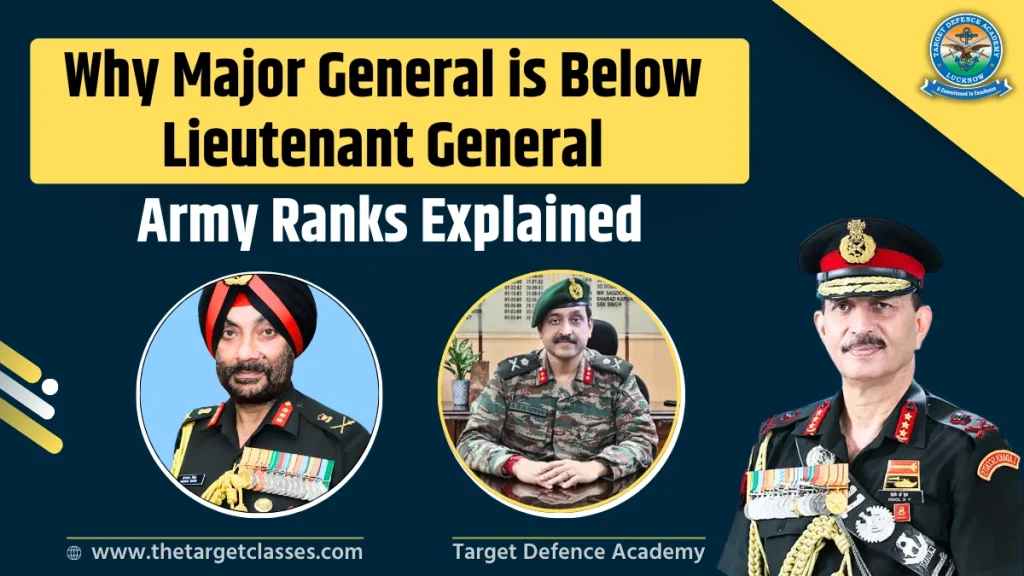
One of the most asked questions in Army Ranks discussions is:
“If there is no larger lieutenant, why is there a lieutenant general over a major general?”
At first glance, it looks like a contradiction. Finally, in the Indian Army (and most of the armies of the British military traditions), a Major’s rank is senior to a Lieutenant, and yet a Lieutenant General overhauls a Major General. Confused, right? But this is not a mistake – it is an attractive bizarre of military history.
Let’s clear the confusion once and for all by way of diving into the evolution of military ranks.
Origin of Army Ranks: A Glimpse into History
To understand the modern structure, we need to take a detour back to medieval European armies, where most contemporary military traditions – including those of the Indian Armed Forces – have their roots.
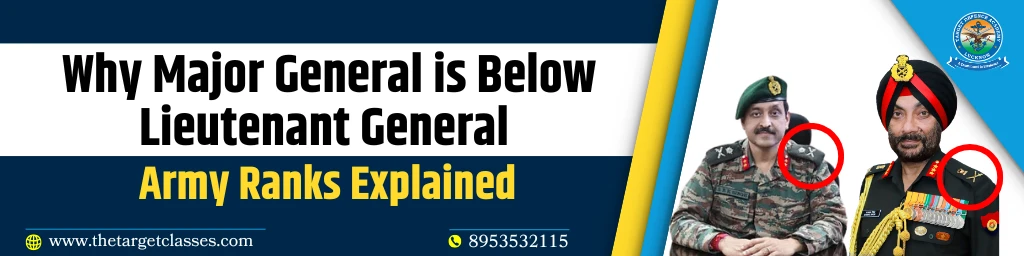
Medieval Command Titles
In the past, commanding an army involved multiple tiers of leadership. These included:
- Captain General – Top commander of the army (like today’s Chief of Army Staff)
- Lieutenant to the Captain General – The second-in-command
- Sergeant Major General – A senior staff officer who handled formations and discipline
Over time, these titles were shortened:
- Captain General became simply General
- Lieutenant to the Captain General became Lieutenant General
- Sergeant Major General became Major General
Notice something interesting? The Major General was originally the Sergeant Major General – a rank below Lieutenant General!
So, despite “Major” sounding senior, the rank Major General originated as a staff assistant rank to the Lieutenant General.
Ranks Progression in the Modern Indian Army
Here’s a simplified comparison to help understand the hierarchy:
| Officer Rank (Ascending Order) | Associated Command |
| Lieutenant | Platoon |
| Captain | Company |
| Major | Battalion (Deputy) |
| Lieutenant Colonel | Battalion |
| Colonel | Regiment/Brigade Staff |
| Brigadier | Brigade |
| Major General | Division |
| Lieutenant General | Corps/Command |
| General (COAS) | Army Chief |
As seen, Major is a mid-level officer rank, while Major General is a two-star general and Lieutenant General is a three-star general. The confusion arises only because we tend to isolate “Major” and “Lieutenant” from their historical compound designations.
Indian Army Ranks and Salary: Basic Pay, Allowances and Perks
Download the Mobile App of Target Defence Academy
Which is the Highest Post in NDA?
Why It Still Makes Sense Today
1. Historical Continuity
Even though the original structure has faded, armies preserve the historical naming conventions. Rank names are part of a legacy system that brings structure, tradition, and international alignment.
2. Functional Roles Over Titles
Ranks today are more about responsibility than semantics. A Major General commands a division of soldiers, near about twenty to thirty thousand, while a Lieutenant General leads a core (more than eighty thousand soldiers). The size, scope, and strategic importance of these units reflect seniority, not the literal meaning of the title.
3. Rank Abbreviations Help
In modern usage:
- Major (Maj) is a field officer.
- Major General (MG) is a senior general officer.
- Lieutenant General (Lt Gen) is senior to both.
This system also exists across many armies worldwide: the UK, the US, Pakistan, Canada, etc.
Our Selections:
![Shubhnandan Tiwari [AIR 501] selected for Lieutenant Rank after Training in Indian Army](https://www.thetargetclasses.com/wp-content/uploads/2025/04/Shubhnandan-Tiwari-1024x1024.webp)


How This Impacts Military Exams and Aspirants
If you’re preparing for UPSC CDS, NDA, or AFCAT, this is a high-yield topic that frequently appears in defence-related current affairs and general knowledge sections.
Knowing this helps you:
- Score in SSB interviews when asked about the military structure
- Improve written answers in defence essays and psychology tests
- Understand the organisational hierarchy in group discussions
Conclusion
Therefore, to pack it in-yes, “Major” may be over “Lieutenant” in junior stretches, but the General Server is a historical contraction of Major General, who was always a junior role for Lieutenant, known to the Captain General.
When you remember that the confusion disappears, these compounds are historical titles, not comparable to the single-word ranking as a major or lieutenant.
FAQs about Army Ranks
Ans. The naming is based on historical military tradition, not modern language logic. It’s a legacy from the British military ranking system.
Ans. The hierarchy of Generals according to their rank is:
Major General than Lieutenant General than General, and Field Marshal (Honorary).
Ans. The name “Lieutenant General” was first a deputy for a well-known General, while the “Major General” became a deputy for Lieutenant General.
Ans. Major General: Crossed baton and sword with one star
Lieutenant General: Crossed baton and sword with two stars
Ans. Yes, many count on “Major General” being better because of the word “Major,” however, in military terms, it’s a lower rank than Lieutenant General.